What Is Ultrasound-Guided Dry Needling and How Can It Help Tendon Pain?
~ By Matthew Coelho ~
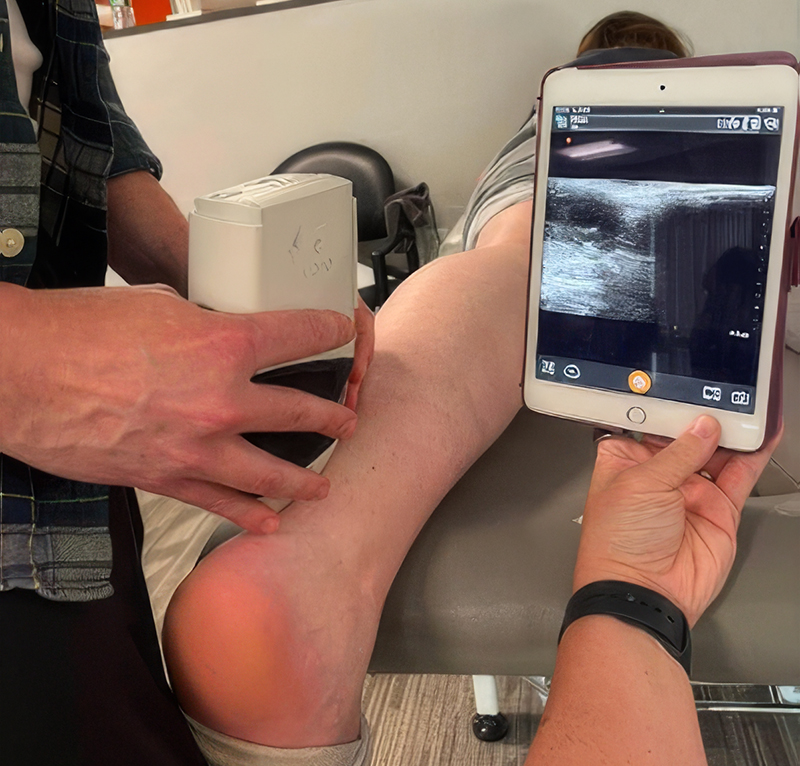
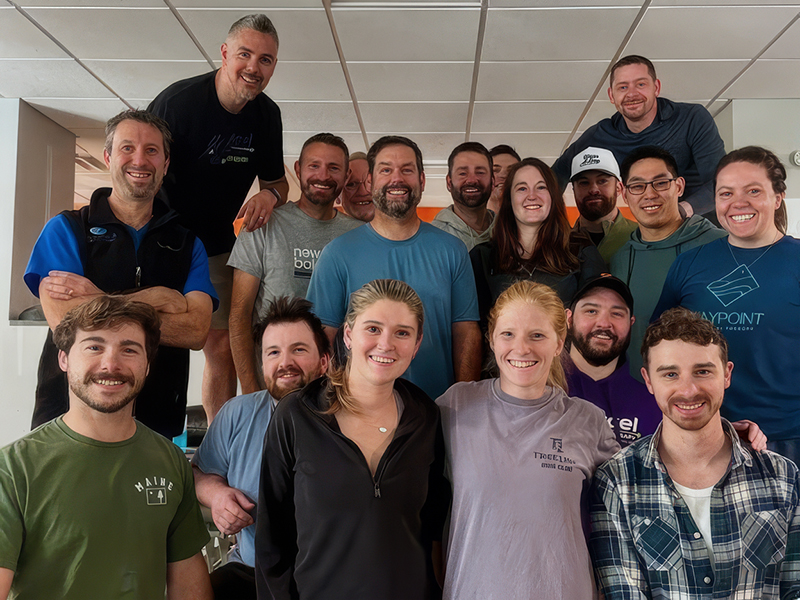
At Atlantic Physical Therapy, we’re always looking for ways to improve the quality and precision of the care we provide. Recently, Matthew Coelho, DPT, and Madison Cronin, DPT, completed an advanced musculoskeletal ultrasound and ultrasound-guided dry needling course in Portland, Maine, hosted by Steven M. Coppola and Glenn J. Flaming. Jennifer Mitchell, DPT, previously completed similar advanced training, further expanding our clinic’s expertise in this growing area of physical therapy.
This training focused on the assessment and treatment of chronic tendon injuries using diagnostic ultrasound and ultrasound-guided dry needling techniques. As a result, Atlantic Physical Therapy now offers ultrasound-guided dry needling for appropriate patients with persistent tendon pain and dysfunction.
What Is Ultrasound-Guided Dry Needling?
Traditional dry needling uses a thin, sterile needle to target muscles and other soft tissues that may be contributing to pain or movement limitations. Ultrasound-guided dry needling builds upon this approach by using diagnostic ultrasound to visualize the tissue in real time during treatment.
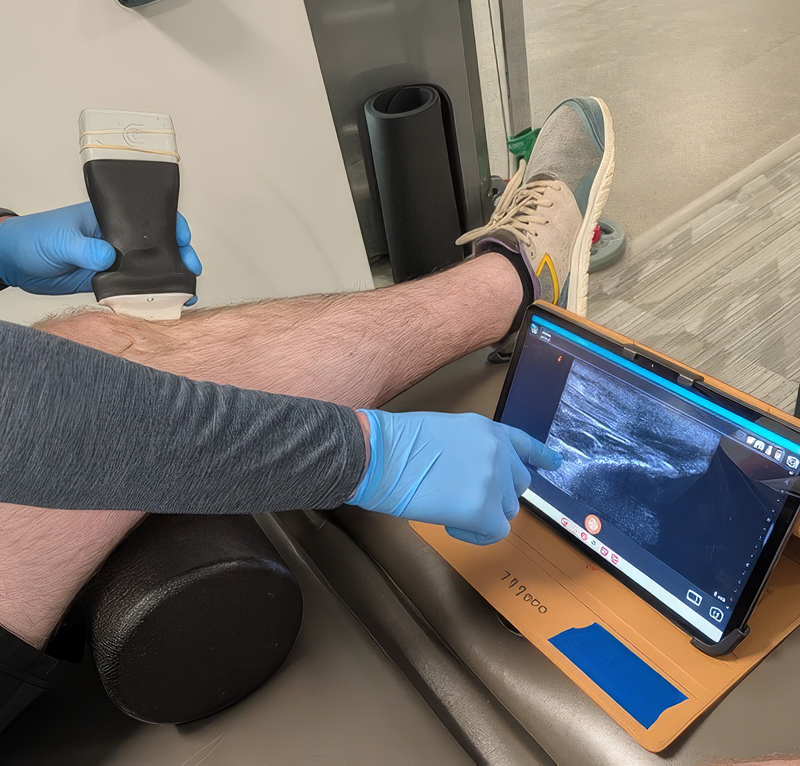
Using our Clarius L7 HD3 wireless ultrasound system, therapists can view tendons directly on the screen instead of relying solely on anatomical landmarks. This allows the therapist to see the target tissue, monitor needle placement, and visualize nearby anatomical structures during the procedure. Think of it as the difference between navigating with a paper map versus using GPS. Both can get you where you need to go, but one provides real-time visual feedback throughout the process.
Why Use Ultrasound?
One of the biggest advantages of musculoskeletal ultrasound is the ability to see what is happening inside the body during the examination.
Unlike X-rays, ultrasound allows therapists to evaluate soft tissues such as tendons in real time. During the course, our therapists learned advanced techniques for visualizing tendon structure, identifying common signs of tendinopathy, and guiding treatment more precisely.
Ultrasound may help us:
- Assess tendon structure and tissue quality
- Compare an injured tendon to the opposite side
- Observe tissues during movement
- Help identify areas that may be contributing to symptoms
- Improve precision when performing dry needling around tendons and other sensitive structures
While ultrasound does not replace a thorough physical therapy evaluation, it can provide additional information that helps guide clinical decision-making.
Which Conditions May Benefit?
Ultrasound-guided dry needling is not intended for every patient with pain. At Atlantic Physical Therapy, we primarily use this approach for individuals with chronic tendon conditions.
Examples may include:
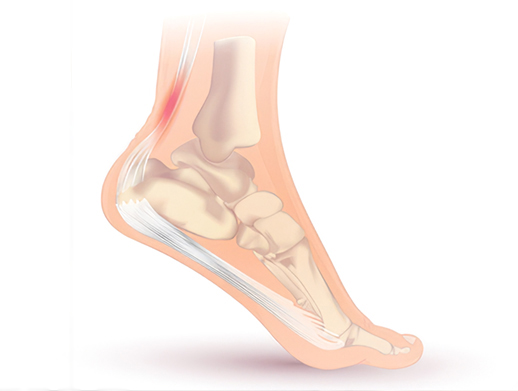
- Achilles tendinopathy
- Patellar tendinopathy (“jumper’s knee”)
- Tennis elbow (lateral epicondylalgia
- golfer’s elbow (medial epicondylalgia)
- Rotator cuff tendinopathy
- Gluteal tendinopathy
- Hamstring tendinopathy
- Other persistent tendon injuries that have not responded fully to traditional treatment
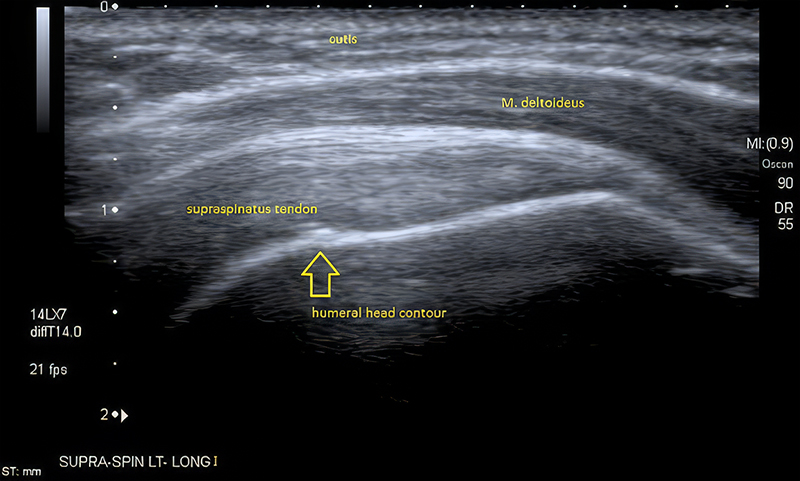
Many tendon injuries become frustrating because they linger for months despite rest, stretching, or activity modification. In these situations, a comprehensive rehabilitation program may require a combination of progressive loading exercises, education, activity modification, and, in select cases, dry needling interventions.
What Does the Research Say?
Research on ultrasound-guided dry needling for tendinopathy continues to evolve.
Current evidence suggests that dry needling may provide benefits for certain chronic tendon conditions when used as part of a comprehensive rehabilitation program. However, it is important to understand that dry needling is rarely a stand-alone solution. The most successful outcomes typically occur when treatment is combined with an appropriately designed exercise program and progressive tendon loading.
What excites us most is not simply the needle itself. It is the ability to use technology to improve both assessment and treatment precision. The combination of clinical examination, evidence-based rehabilitation, and real-time ultrasound imaging allows us to make more informed treatment decisions for patients with chronic tendon pain.
What Is a Treatment Like?
For patients who are appropriate candidates, the process typically begins with a comprehensive physical therapy evaluation.
This includes:
- A detailed history
- Movement assessment
- Strength testing
- Functional testing
- Ultrasound examination when indicated
If ultrasound-guided dry needling is appropriate, the affected tendon is visualized on the ultrasound screen while the therapist performs the treatment. The procedure generally takes only a few minutes.
Most patients experience some temporary soreness afterward, similar to what can occur after exercise or traditional dry needling. Following treatment, patients are typically guided through a progressive rehabilitation program designed specifically for their condition and goals.
A Real-World Example
Imagine a runner who has experienced Achilles tendon pain for eight months.
They have tried stretching, reducing mileage, changing shoes, and resting from running, but the symptoms continue to return whenever training increases.
A physical therapy evaluation identifies deficits in tendon loading capacity, strength, and running mechanics. Ultrasound imaging provides additional information regarding the tendon, and ultrasound-guided dry needling may be incorporated as part of a broader treatment plan that includes progressive strengthening and return-to-running guidance.
The goal is not simply to calm symptoms temporarily. The goal is to help the patient build a stronger, more resilient tendon that can tolerate the demands they place on it.
Continuing to Invest in Better Care
Physical therapy continues to evolve, and so does our commitment to professional development.
Advanced training in musculoskeletal ultrasound allows our therapists to better evaluate tendon injuries, visualize tissue in real time, and provide additional treatment options for patients with persistent tendon pain. The recent training completed by Matthew Coelho and Madison Cronin, along with previous training completed by Jennifer Mitchell, reflects Atlantic Physical Therapy’s ongoing investment in evidence-informed care and clinical excellence.
Wondering If You’re a Candidate?
If you’re struggling with chronic tendon pain, recurring tendon injuries, or a condition that hasn’t improved despite previous treatment, physical therapy may be able to help.
Contact Atlantic Physical Therapy to schedule an evaluation and learn whether ultrasound-guided dry needling may be appropriate as part of your rehabilitation plan.
Call 207-797-3006 or contact our office to schedule an appointment.